
 EN
EN



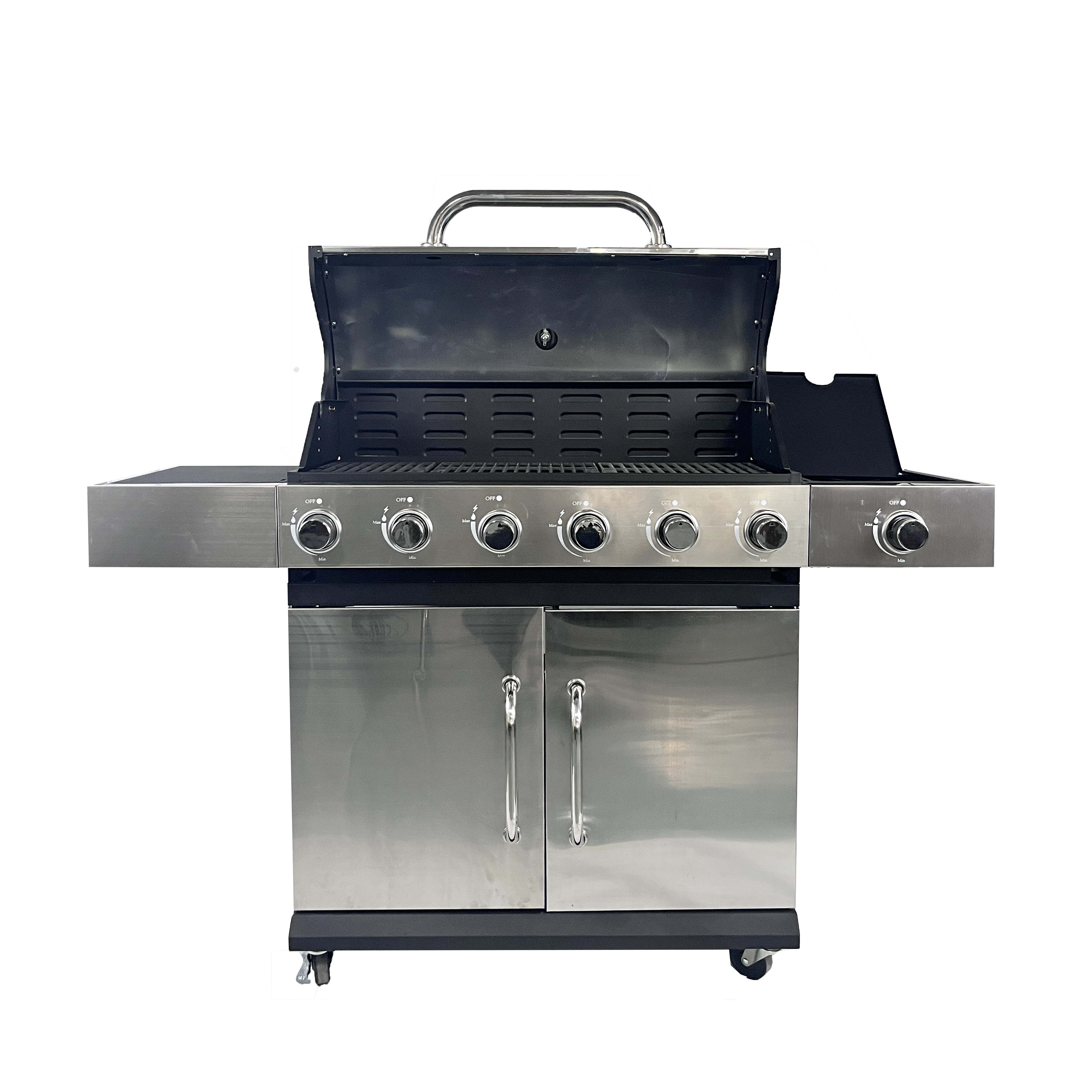
In today's competitive outdoor cooking market, differentiation is everything. Retailers and distributors who rely on generic products often struggle to build lasting brand loyalty. Choosing an OEM gas grill customization strategy gives businesses a direct path to standing out on the shelf, commanding premium pricing, and cultivating repeat customers who associate quality outdoor cooking with your specific brand name.

An OEM gas grill is not simply a rebranded product. It represents a fully tailored manufacturing approach where specifications, aesthetics, materials, and features are aligned to meet a brand owner's exact market requirements. Whether you are launching a private-label line for a home improvement chain or expanding a regional outdoor lifestyle brand, understanding how OEM gas grill customization works — and why it drives retail growth — is a critical business advantage worth exploring in depth.
What OEM Gas Grill Customization Actually Involves
The Scope of Customization Available
When brands engage with an OEM gas grill manufacturer, the scope of customization goes far beyond applying a logo sticker to a standard unit. A true OEM gas grill program allows brand owners to specify burner count, BTU output, cooking surface dimensions, ignition system type, and cabinet material finish. This level of control means that each OEM gas grill delivered to market reflects deliberate decisions made by the brand, not the factory's default configuration.
Color options, handle materials, side shelf configurations, and smoker box integration are all negotiable elements in a well-structured OEM gas grill program. Retailers targeting premium buyers may choose stainless steel construction and electronic ignition, while value-oriented lines may favor powder-coated carbon steel frames with piezo ignition. In both cases, the OEM gas grill program ensures the final product is intentionally designed for a defined customer segment.
How Branding Is Embedded Into the Product
Brand embedding in an OEM gas grill goes beyond surface-level labeling. Manufacturers can cast or emboss brand logos directly into metal components, engrave identifiers onto control panels, and use custom-colored packaging that reinforces the retail brand experience from the moment a consumer opens the box. An OEM gas grill that carries cohesive branding across the unit, the manual, and the packaging creates a strong first impression that generic products simply cannot match.
This embedded identity is especially valuable for retail chains that want customers to return for accessories, replacement parts, and future grilling equipment purchases. When a consumer recognizes your OEM gas grill brand as trustworthy and well-designed, the relationship extends well beyond the initial transaction.
Why OEM Gas Grill Programs Drive Retail Growth
Margin Control and Pricing Power
One of the strongest commercial arguments for an OEM gas grill strategy is the margin control it enables. When a retailer sells a commodity product under a third-party brand, price competition from other channels is immediate and relentless. An OEM gas grill carrying your private label eliminates that direct apples-to-apples price comparison. Consumers cannot find your exact OEM gas grill model on a competitor's website, giving your retail channel the pricing flexibility needed to protect margins while still offering compelling value.
Distributors also benefit from OEM gas grill exclusivity. Securing a customized product line that no other distributor carries in your territory creates a defensible market position. This exclusivity is a powerful negotiating tool when approaching large retail buyers who value category differentiation and reduced price erosion across their product mix.
Building Long-Term Brand Equity
Every OEM gas grill sold under your brand name is a physical advertisement for your business. Consumers who enjoy their OEM gas grill experience share it through social media, word of mouth, and product reviews. Over time, a well-executed OEM gas grill program accumulates brand equity that translates into higher conversion rates, stronger retailer relationships, and expanding distribution opportunities. Brands that invest early in OEM gas grill customization tend to achieve faster recognition in the market compared to those reselling unbranded or multi-brand inventory.
Building this equity requires consistency. An OEM gas grill line should maintain visual and performance coherence across SKUs so that a consumer who purchases an entry-level OEM gas grill and later upgrades naturally gravitates toward your brand's premium models rather than exploring competitors.
Key Factors in Selecting an OEM Gas Grill Manufacturing Partner
Manufacturing Capability and Compliance
Selecting the right OEM gas grill partner begins with assessing manufacturing depth. A capable OEM gas grill factory should demonstrate experience producing multi-burner units with heavy-duty trolley frames, integrated smoker chambers, and smokeless combustion designs that meet modern consumer expectations. Capacity to handle both small development runs and large retail replenishment orders is equally important for scaling your OEM gas grill business without disruption.
Compliance readiness is non-negotiable for any OEM gas grill entering regulated retail markets. Your manufacturing partner must be familiar with relevant gas appliance safety standards and able to provide certification documentation for each OEM gas grill configuration sold in your target geography. Skipping compliance verification exposes your brand to liability and costly product recalls that can permanently damage the equity you have worked to build.
Communication, Sampling, and Lead Time Management
An OEM gas grill program moves at the speed of communication. Factories that respond quickly to specification changes, provide accurate pre-production samples, and manage lead times transparently are partners that enable growth rather than constrain it. Request detailed OEM gas grill sample approval processes and ensure that color, finish, and dimensional tolerances are documented and enforced before committing to production runs.
Lead time management is especially critical for seasonal retail windows. An OEM gas grill line that misses a spring selling season can set a brand back by an entire year. Partnering with manufacturers who have demonstrated on-time delivery records for OEM gas grill orders is a fundamental risk management decision that directly impacts your retail growth trajectory.
FAQ
What is the typical minimum order quantity for an OEM gas grill program?
Minimum order quantities for an OEM gas grill program vary by manufacturer and configuration complexity. Entry-level OEM gas grill customization programs often start at 100 to 500 units per model, while more deeply customized OEM gas grill designs requiring unique tooling may require higher initial commitments. Always discuss MOQ flexibility early in partner negotiations to align your OEM gas grill investment with realistic sales projections.
How long does it take to develop a custom OEM gas grill from concept to delivery?
A standard OEM gas grill development cycle from initial specification to first delivery typically ranges from 60 to 120 days, depending on the level of customization required. Simple OEM gas grill programs involving logo and color changes on an existing platform can be completed faster, while a fully custom OEM gas grill design with new tooling requires additional engineering and sample approval time. Planning your OEM gas grill launch timeline at least one season in advance is strongly recommended.
Can an OEM gas grill be certified for multiple international markets?
Yes, an OEM gas grill can be engineered and certified for multiple international markets, provided the manufacturing partner has experience with the relevant gas appliance standards for each target region. Discussing multi-market OEM gas grill compliance during the product development phase is far more efficient than retrofitting certifications after production. A qualified OEM gas grill supplier will guide you through the necessary testing and documentation requirements for each market you intend to enter.